

As a cat collar supplier, I often get asked by cat owners how they can tell if their feline friends actually like wearing a collar. It's a valid concern, as we want our cats to be comfortable and happy while also enjoying the benefits that a well - chosen collar can provide. In this blog post, I'll share some insights on how to gauge your cat's acceptance of wearing a collar and also introduce some of our great cat collar products.
Initial Reactions
When you first introduce a collar to your cat, pay close attention to its immediate reactions. A cat that is okay with the collar might sniff it curiously, then allow you to put it on without much fuss. On the other hand, a cat that dislikes the collar may show signs of distress right away. It could try to paw at the collar, shake its head vigorously, or even run away when you approach with the collar in hand.
Some cats may also vocalize their discomfort. They might meow loudly, hiss, or growl. These are clear signals that your cat is not happy about the collar. If you notice these behaviors, it's important to give your cat a break and try again later. You can also try different types of collars to see if a different material or style suits your cat better.
Long - Term Behavior
Once your cat has worn the collar for a while, observe its long - term behavior. A cat that likes wearing a collar will generally go about its normal activities without being overly bothered by it. It will play, eat, sleep, and groom itself as usual. You may notice that the cat doesn't constantly try to remove the collar or seem distracted by it.
However, if your cat starts to show changes in behavior, it could be a sign that the collar is causing problems. For example, if your cat becomes less active, stops playing, or seems more withdrawn, it might be because the collar is uncomfortable. Some cats may also develop skin irritations around the neck area if the collar is too tight or made of a rough material. Check your cat's neck regularly for any signs of redness, hair loss, or sores.
Collar Fit
The fit of the collar is crucial in determining whether your cat will like wearing it. A collar that is too tight can be extremely uncomfortable and even dangerous for your cat. It can restrict breathing, cause skin irritation, and make it difficult for your cat to move its head freely. On the other hand, a collar that is too loose can easily fall off or get caught on objects, posing a risk of strangulation.
To ensure a proper fit, you should be able to fit two fingers comfortably between the collar and your cat's neck. This allows enough room for movement but also keeps the collar secure. You may need to adjust the collar as your cat grows or if it gains or loses weight.
Material and Style
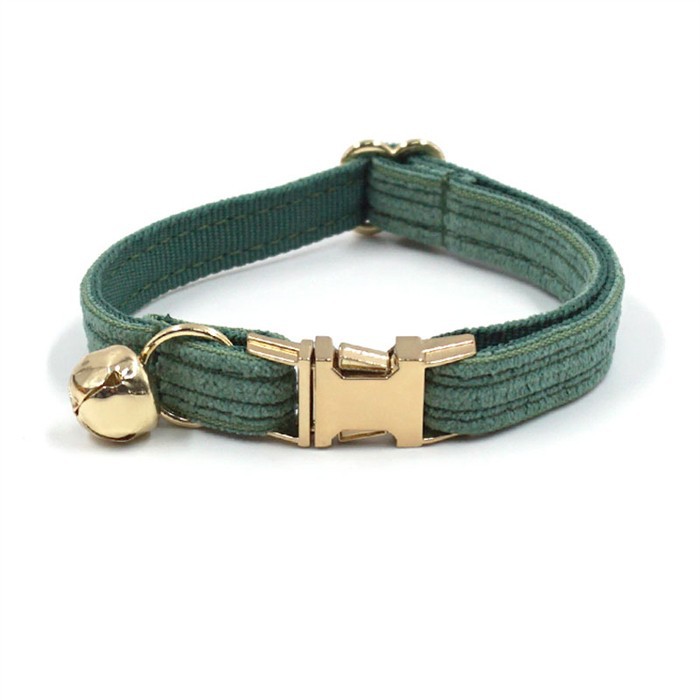
The material and style of the collar can also have a big impact on your cat's comfort. Cats have sensitive skin, so it's important to choose a collar made of soft, breathable materials. For example, our Corduroy Cat Collar is made of a plush corduroy fabric that is gentle on your cat's skin. The smooth texture won't cause irritation, and the collar is flexible enough to allow your cat to move freely.
Another popular option is our Sage Green Velvet Cat Collar. Velvet is a luxurious and soft material that feels great against your cat's fur. It gives your cat a touch of elegance while also being comfortable to wear.
In addition to the material, the style of the collar can also affect your cat's acceptance. Some cats may prefer a simple, plain collar, while others may not mind a collar with a little bit of decoration. Just make sure that any decorations are securely attached and won't pose a choking hazard.
Benefits of Collars
It's important to remember that collars can provide several benefits for your cat. A collar with an ID tag can help ensure that your cat is returned to you if it gets lost. It can also carry a bell, which can be useful for alerting birds and other small animals when your cat is on the prowl, reducing the risk of it catching wildlife.
As a cat collar supplier, we are committed to providing high - quality collars that are both functional and stylish. Our Corduroy Cat Collar is not only comfortable for your cat but also made with durable materials to ensure long - lasting use.
Conclusion
Determining whether your cat likes wearing a collar requires careful observation of its behavior, both initially and over time. Pay attention to the fit, material, and style of the collar, and make adjustments as needed. Remember that every cat is different, and what works for one cat may not work for another.
If you're interested in purchasing high - quality cat collars for your feline friends or for your business, we'd love to hear from you. We offer a wide range of cat collars in different materials, styles, and colors. Contact us to start a procurement discussion and find the perfect cat collars for your needs.

References
- Overall, Karen L. "Clinical Behavioral Medicine for Small Animals." Mosby, 1997.
- Houpt, Katherine A. "Domestic Animal Behavior For Veterinarians And Animal Scientists." Wiley - Blackwell, 2005.