

As a cat collar supplier, I've seen firsthand the growing popularity of tracking cat collars. These nifty gadgets promise to keep our feline friends safe by letting us know where they are at all times. But just how accurate are they? Let's dig into this topic and find out.
How Tracking Cat Collars Work
First off, it's important to understand how these collars work. Most tracking cat collars use GPS (Global Positioning System) technology. GPS works by communicating with a network of satellites orbiting the Earth. The collar sends a signal to these satellites, which then triangulate the collar's position based on the time it takes for the signal to travel.
Some collars also use other technologies like Wi-Fi and Bluetooth to improve accuracy. Wi-Fi tracking can be useful when your cat is near a known Wi-Fi network, as it can provide more precise location information. Bluetooth, on the other hand, can be used to track your cat's proximity to your phone or other Bluetooth-enabled devices.
Factors Affecting Accuracy
Now, let's talk about the factors that can affect the accuracy of tracking cat collars.

Satellite Coverage
One of the biggest factors is satellite coverage. GPS signals need a clear line of sight to the satellites to work properly. If your cat is indoors, in a basement, or under a thick canopy of trees, the GPS signal may be blocked or weakened, leading to less accurate location data.
For example, if your cat decides to take a nap in a windowless room, the collar may have trouble getting a strong GPS signal. This can result in the location data being off by a few meters or even more.
Weather Conditions
Weather conditions can also play a role. Heavy rain, snow, or thick clouds can interfere with the GPS signal. Just like with satellite TV, bad weather can cause the signal to be disrupted, making it harder for the collar to accurately determine your cat's location.
Collar Placement
The way the collar is placed on your cat can also affect accuracy. If the collar is too loose or too tight, it may not be able to maintain a good connection with the satellites. Additionally, if the collar is covered by your cat's fur or other objects, it can block the GPS signal.
Battery Life
Battery life is another important factor. If the collar's battery is low, it may not be able to send or receive signals properly. This can lead to inaccurate location data or even cause the collar to stop working altogether.
Real-World Accuracy
So, what can you expect in terms of real-world accuracy? In ideal conditions, most tracking cat collars can provide location data accurate to within a few meters. However, in less than ideal conditions, the accuracy can vary widely.
Some users have reported that their collars are accurate to within a few feet when their cats are outdoors in open areas with good satellite coverage. But when their cats are indoors or in areas with poor signal, the accuracy can drop to several meters or more.
It's also important to note that the accuracy of tracking cat collars can vary depending on the brand and model. Some collars are designed to be more accurate than others, so it's important to do your research before making a purchase.
Our Cat Collar Offerings
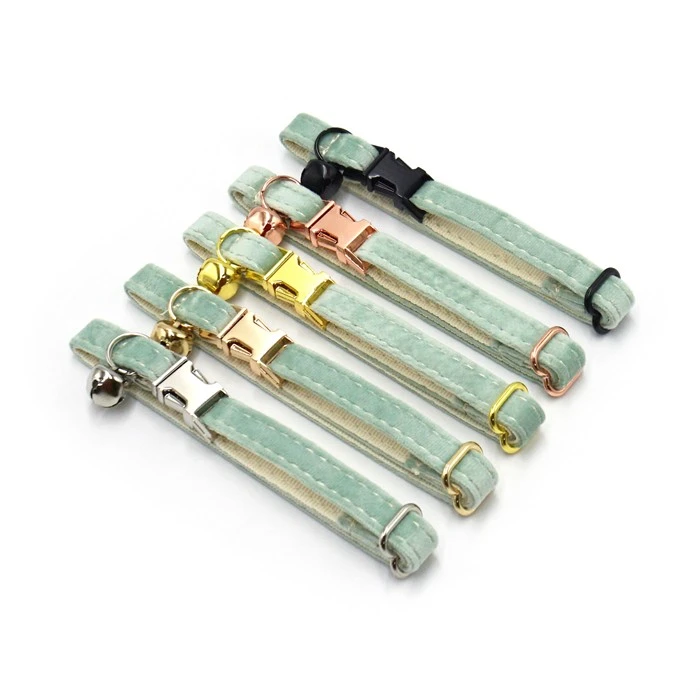
At our company, we offer a range of cat collars, including some with tracking capabilities. Our Sage Green Velvet Cat Collar is not only stylish but also comes with a reliable tracking feature. It's made from high-quality velvet, ensuring your cat stays comfortable while you keep an eye on their whereabouts.
We also have the Corduroy Cat Collar. This collar is made from durable corduroy and is available in a variety of colors. It's a great option for cat owners who want a practical and stylish collar for their furry friends. And if you're looking for another option, check out our Corduroy Cat Collar.
Improving Accuracy
If you're using a tracking cat collar, there are a few things you can do to improve its accuracy.
Keep the Collar Charged
Make sure to keep the collar's battery charged. Most collars come with a charging cable, so it's easy to plug it in and give it a boost when needed.
Check the Collar Placement
Regularly check the collar to make sure it's properly placed on your cat. It should be snug but not too tight, and the GPS antenna should be exposed.
Update the Firmware
Some collars allow you to update the firmware to improve performance. Make sure to check for updates regularly and install them as needed.
Conclusion
In conclusion, tracking cat collars can be a useful tool for keeping tabs on your cat's whereabouts. While they may not be 100% accurate all the time, they can still provide valuable information, especially in emergency situations.
If you're interested in purchasing a tracking cat collar or any of our other cat collar products, we'd love to hear from you. Whether you're a pet store owner looking to stock our products or an individual cat owner in need of a new collar, we're here to help. Reach out to us, and let's start a conversation about how we can meet your cat collar needs.
References
- GPS Technology Basics. National Oceanic and Atmospheric Administration.
- Factors Affecting GPS Accuracy. GPS.gov.